
Composting Toilets: The 3 Best Available in NZ – 2026
Lorem ipsum dolor sit amet, consectetur adipiscing elit. Ut elit tellus, luctus nec ullamcorper mattis, pulvinar dapibus leo.
One question prospective Tiny Home clients ask us all the time is ‘what happens with the plumbing’. The answer is that many options exist. Some clients connect to a pre-existing septic system with full 100mm buried pipes, or use a macerator pump to do the same. One of the most common solutions is a Composting Toilet. At Fox Cabins, we have built over 100 Tiny Homes since 2017 and installed most of the available composting toilet brands in that time. This list will help you choose the best composting toilet for your Tiny Home today.
Why choose a Composting Toilet?
Better for the Environment
- Blackwater never enters the aquifer.
- The toilet uses no clean drinking water to flush waste.
- Eliminating treated, purified water for flushing reduces your carbon footprint.
Zero Water Use
- A family can save over 35,000 litres of water per year — around 40% of total household water use.
- Composting toilets suit off-grid living, tiny homes, and motorhomes where collecting, storing, and disposing of water is difficult.
- They work well in rural settings where households rely on tank water and need to reduce usage — running out means trucking it in.
Low Cost
- Installing a septic tank system typically costs between $15,000 and $25,000.
- Quality composting toilets cost around $2,000 and offer plenty of functionality.
- Running costs are minimal — just the cost of a composting medium such as sawdust or coconut coir.
Self Contained
- No underground water pipes in and no waste pipes out means you can move your Tiny Home or Motorhome freely. Park anywhere, move anywhere.
No Odour
- The venting system dries solids and speeds up the composting process, eliminating odours.
Council Compliant
The OGO Origin and Nature’s Head composting toilets meet building code requirements and can gain Building Consent. Both have achieved the PASS Product Assurance Supplier Statement — the only two composting toilets in New Zealand to reach this standard.
Best Tiny Home Composting Toilet – OGO Origin
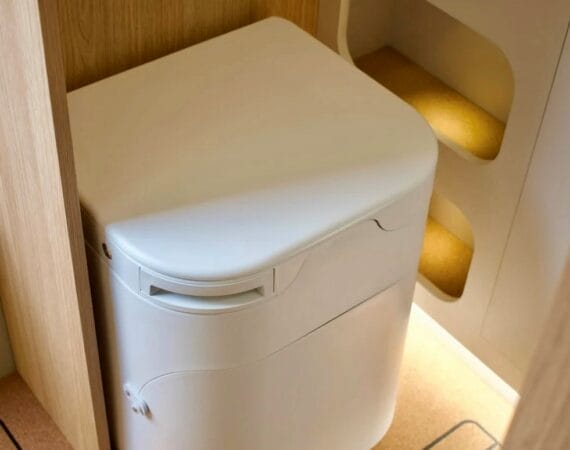
The OGO Origin is the only composting toilet in New Zealand to hold a Product Assurance Supplier Statement (PASS-19210). This makes it Building Code compliant for use in consented off-grid dwellings under the NZ Building Code. It also meets AS/NZS 1546.2:2008 for use in houses, temporary or permanent domestic buildings, and tiny homes. It has received Green Sticker Self Containment Certification for campervans, motorhomes, caravans, and tiny homes. Fox Cabins builds the Origin from high-quality polypropylene with an ergonomically shaped seat. It measures 38cm deep by 40.6cm wide by 47cm tall and weighs approximately 13kg.
Key features include a push-button electric agitator, fan ventilation, patented urine diversion technology, and a built-in liquid sensor. The urine bottle holds just over nine litres. The solid waste container handles up to 30 uses before requiring emptying. The agitator runs for 45 seconds per cycle, mixing solid waste with coconut coir to support composting. The unit runs on either 12V or 240V power. An optional urine drain kit eliminates the need for a storage bottle entirely.
The OGO Origin suits tiny home applications for several reasons. Its compact footprint and permanent installation options make it feel more like a conventional toilet than a portable unit. NZ Building Code compliance means builders can specify it in council-consented builds, removing a common regulatory hurdle. For those seeking a composting toilet that balances everyday usability with compliance, the Origin is a practical and well-documented choice.
Best Campervan Composting Toilet – OGO Nomad
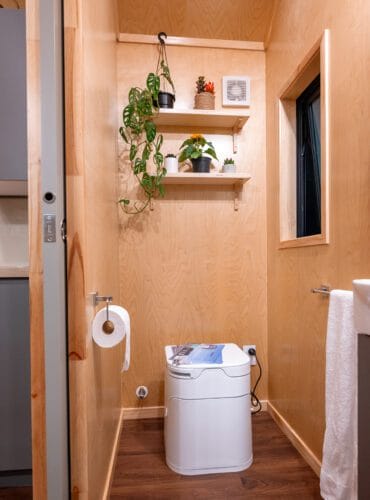
The OGO Nomad was purpose-built for the New Zealand self-contained campervan, motorhome, and caravan market. It was the first composting toilet in New Zealand to receive Self-Containment Certification approval. It measures 315mm high, 335mm wide, and 395mm deep, and includes a 12V fan venting system as standard. At just 6.8kg, it ranks among the lightest composting toilets available, making it ideal for weight-sensitive vehicle conversions.
The Nomad uses a non-electric layering method rather than a motorised agitator. After each use, you simply layer coconut coir over the solid waste by hand. The 12V fan draws just 1.68 amp hours per day. The six-litre urine bottle meets Self Containment Certification requirements for two people. Retailers such as Bunnings and Mitre 10 stock coconut coir nationwide, which is a practical advantage for those travelling around New Zealand.
The Nomad’s suitability for campervans comes down to its design brief. Kahu NZ developed it specifically to meet New Zealand’s Green Sticker Self Containment regulations. Its minimal power draw suits the small solar setups common in van conversions. Simple, non-electric operation also reduces the risk of mechanical issues on the road. For campervan owners wanting a straightforward, compliant, and compact solution, the OGO Nomad is the purpose-built answer.
Best Off-Grid Composting Toilet – Nature’s Head
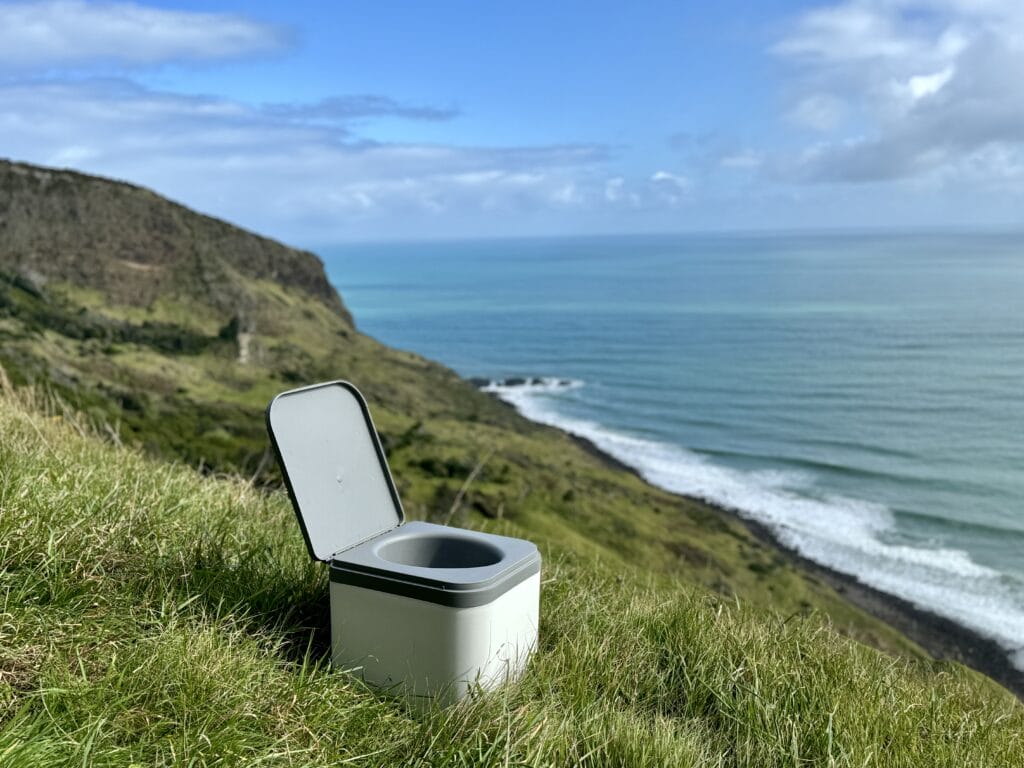
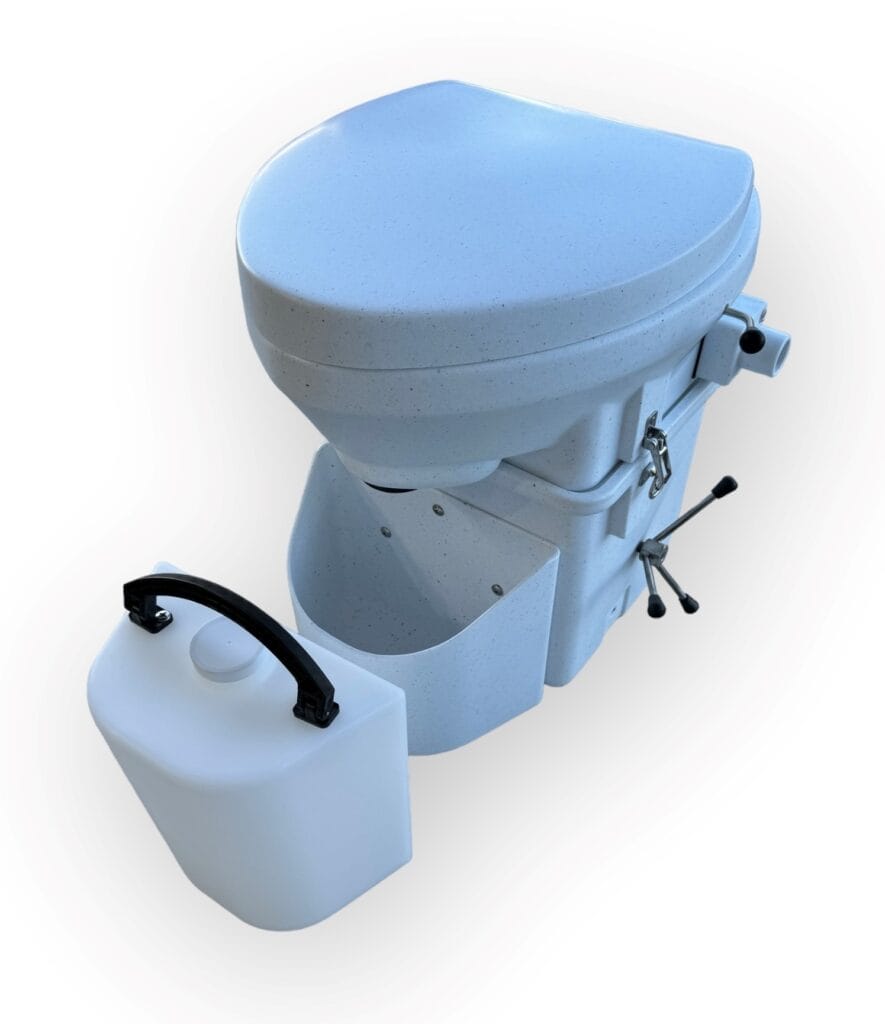
The Nature’s Head is a portable, self-contained composting toilet. Marine-grade stainless steel hardware and robust construction allow it to withstand demanding conditions. It suits a wide range of environments including tiny homes, horse floats, boats, and off-grid living. Manufacturers in the United States produce it to a high standard. It runs on either 12V or 240V power and installs with just two floor-mounted brackets and a ventilation hose. It holds PASS Certification under AS/NZS 1546.2:2008, making it compliant for use in consented buildings in New Zealand.
The Nature’s Head separates liquid and solid waste. A built-in 12V ventilation fan and coconut coir medium manage odour and moisture in the composting chamber. A side-mounted handle lets users mix the compost regularly to aid decomposition. The urine bottle holds eight litres — roughly three days of full-time use for two people. The solid waste container handles between 60 and 80 uses before requiring emptying, which is notably higher than most comparable units.
The Nature’s Head suits off-grid applications particularly well. Its durability, low maintenance requirements, and high solid waste capacity all make a difference in remote locations. Longer intervals between empties mean less frequent upkeep — a real advantage when you are far from services. Running costs stay low, with coconut coir, peat moss, or sawdust as the only consumable. Stainless steel construction and a strong long-term reliability record make it the right choice where serviceability and longevity matter most.
Want To Suggest An Addition?
As the more Composting Toilets become available in New Zealand, there are likely a few that we’ve missed here. Feel free to drop us a line and let us know who you think should be included here.